Table of Contents
- The wool body decides everything
- Leather sleeves are a separate brief
- Where the two materials meet
- Chenille, letters and the snap front
- Grading a two-fabric garment
- Before you sign off, and related guides
A custom varsity jacket is two garments sewn into one, and most briefs treat it as one. That is where the trouble starts. The wool body shrinks, the leather sleeve does not, and the ribbed trim has to bridge the difference. Pick the body cloth first. Then the sleeve material. The decoration comes last.
The wool body decides everything
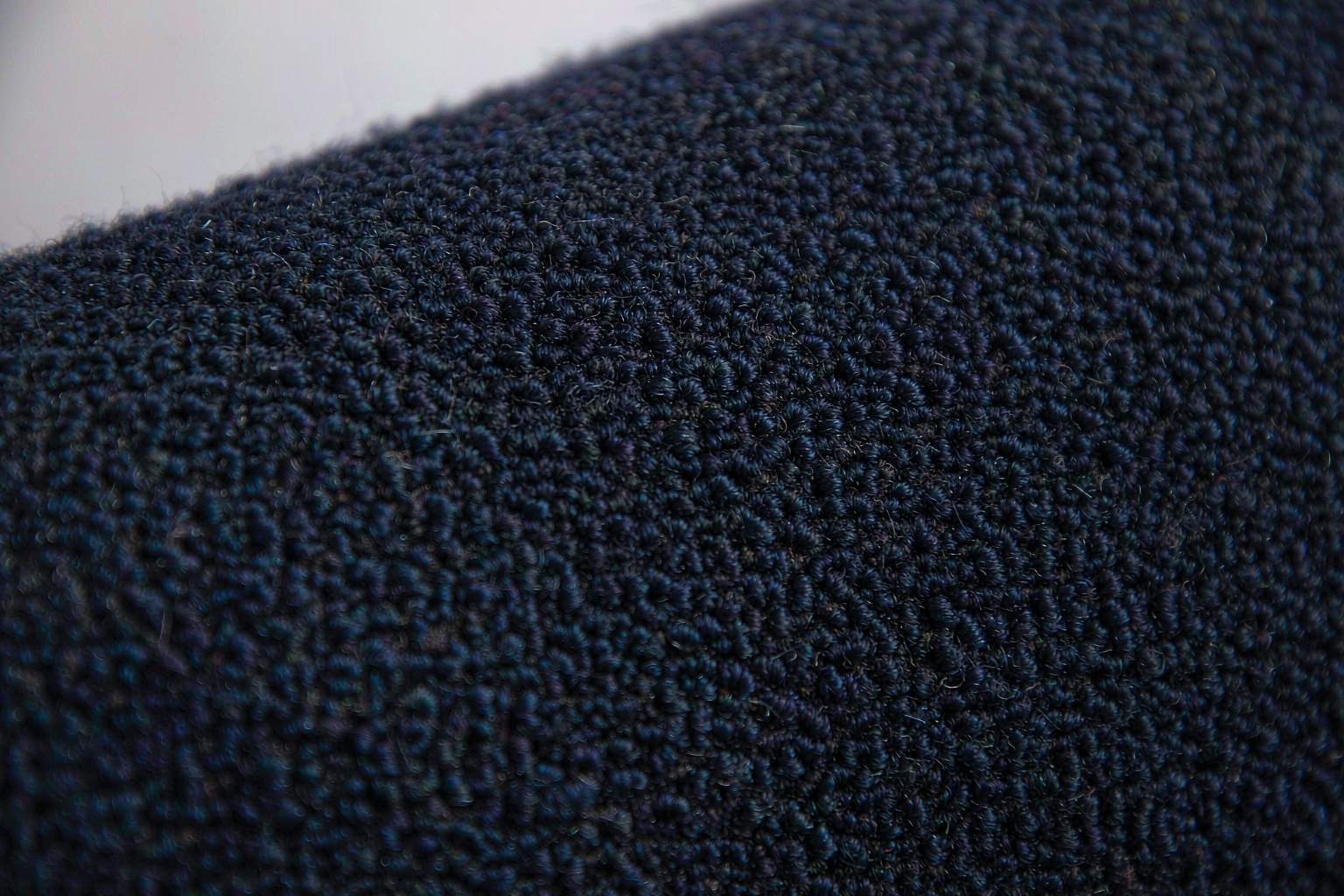
Melton wool is the traditional body fabric for a reason. It is heavily felted, so the surface is dense and cut edges do not fray. That matters here, because a varsity body has exposed cut edges at the snap placket and the collar. A loose weave needs binding everywhere, and the bulk shows at the collar points.
Suppliers commonly list Melton wool in weights from about 16 oz to 22 oz per square yard. That is a wide range. The lighter end gives you a jacket that drapes and works for early autumn. The heavier end gives you structure and warmth, and it holds a press better after the jacket has been folded for shipping. For a first range I would pick something in the middle and write the number on the spec. A weight described as “heavyweight” with no number attached is a phrase, not a specification.
Warmth has a published method behind it. ASTM D1518 measures the combined thermal transmittance of textile materials and reports it as a clo value, which is the standard unit for insulation in clothing. Ask whether the mill has a clo figure for the wool. If they do, put it in the tech pack alongside the weight. If not, a testing house can run one, and the number lets you compare two wools that feel similar in your hand but behave differently on a cold morning.
Leather sleeves are a separate brief
Genuine leather sleeves and PU synthetic sleeves share a silhouette but almost nothing else. Leather breathes, stretches a little across the grain, and takes a natural patina. PU is more stable, easier to cut in bulk, and does not vary hide to hide. Both are valid choices. Mixing them up in a spec is not.
If the sleeve is PU, ask about the coating. ASTM D751 is the standard battery of test methods for coated fabrics, and it covers breaking strength, tear resistance, adhesion of the coating to the backing fabric, and abrasion resistance. Put the method number on the spec and ask which of those tests the supplier runs. A coating that delaminates after a month on a rack is the single most common failure on a budget varsity, and it is one that a desk full of swatches will never show you.
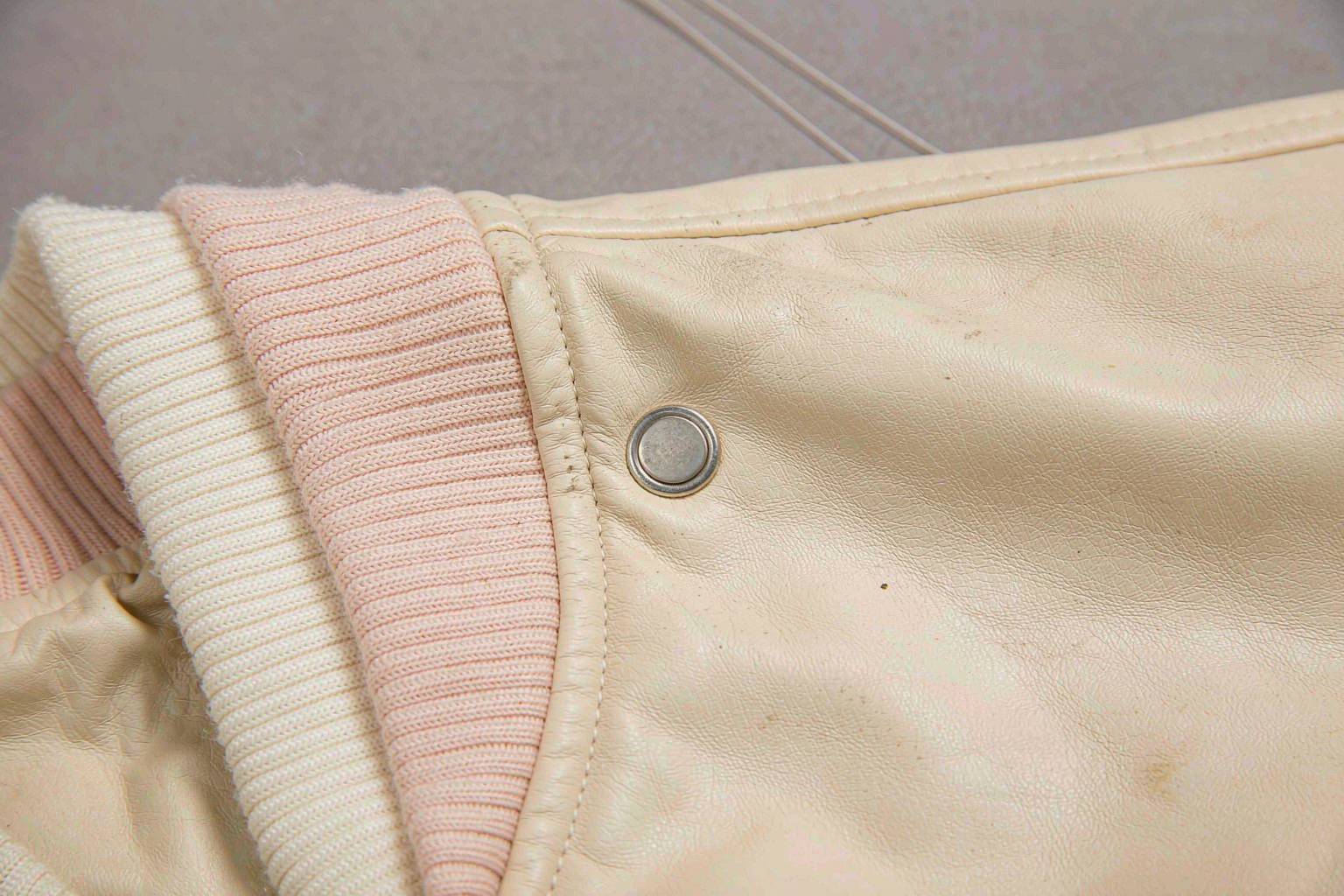
Thickness tells you how the sleeve will wear. PU for outerwear is commonly specified between 0.8 mm and 1.4 mm total thickness, with 1.2 to 1.3 mm a frequent range for jacket shells. Thinner than 0.8 mm and the sleeve feels flimsy. Thicker than 1.4 mm and the snap placket becomes hard to close, because the layers stack up at the front.
If the sleeve is genuine leather, ask about the hide source and the cut direction. A sleeve cut across the hide stretches differently from one cut along the spine. Write the direction down.
Where the two materials meet
The wool-to-leather junction is the most inspected seam on the garment, and it is where re-orders fail. Wool shifts. Leather does not. The seam that looked clean on the first sample can pucker on the second batch because the wool relaxed during cutting and the leather stayed put.
ASTM D1683 measures seam failure in woven fabrics by pulling perpendicular to a sewn seam until something gives. It separates three failure modes: yarn slippage, fabric rupture and thread breakage. On a varsity body, worry about slippage, because felted wool shifts under tension even when the stitching holds. Ask for the test on the actual wool, not a generic swatch.
- Specify the seam allowance at the wool-leather junction. A wider allowance on the wool side gives the fibres more grip.
- Ask for a topstitch on both sides of the seam. One row is decorative. Two rows actually hold.
- Put the snap placement on the spec drawing, not in a separate email. Snap position shifts the placket tension.
Chenille, letters and the snap front
Chenille patches are the signature decoration, and they belong on the wool body, not on the leather. A chenille patch heat-bonded to a genuine leather sleeve will lift at the edge within a season, because leather flexes and the patch does not. Put chenille on wool, where the felted surface holds the adhesive, and use embroidered twill or woven labels on the sleeve.
The snap front is the other recurring problem area. Snap hardware gets ordered by diameter and colour, almost never by pull strength. A size 18 line snap in a black oxide finish is common, but the finish varies between suppliers, and two snaps that look the same can sit a shade apart under a shop light. Buy them from one batch. Write the batch number on the trim list.
Small lettering on a chenille patch closes up. Simplify the mark before it goes to the embroidery house. A two-letter monogram in a block font will read from across a shop floor. A full team name in a script font, rendered at 20 mm height, will not.
Grading a two-fabric garment
Grading a varsity is not like grading a single-fabric jacket, because the wool and the leather grow at different rates. A medium wool body might pair with a medium leather sleeve, but at an extra large the sleeve grade may need a different pattern piece to get the proportion right. Ask for the smallest and largest sizes in the same size set and put them on the same rail.
Check the shoulder. The wool shoulder seam should sit at the natural shoulder point, and the leather sleeve starts exactly there. A sleeve that starts half an inch below looks like a dropped-shoulder cut, which is a style choice, not a grading error. Know which one you intended.
Check the ribbed collar. Stretch it, let go, wait. A collar that does not recover will look tired by the second week on the rail. Ribbing recovery takes about three seconds to check.
FAQ
Q1: What is a custom varsity jacket?
A jacket made to your own specification of wool body, sleeve material, ribbed trim, snap front and decoration. A blank stock jacket with a logo added later is not the same thing.
Q2: Melton wool vs. fleece body: what is the difference?
Melton is a woven, felted wool that holds structure and does not fray at cut edges. Fleece is a knitted fabric that stretches, pills and needs finished edges everywhere. Melton is the traditional choice. Fleece is cheaper and lighter.
Q3: Can we use PU instead of real leather?
Yes. PU is stable, consistent and easier to cut in bulk. Specify the thickness, the coating adhesion test and the finish. Do not let the factory substitute one for the other without telling you, because the seam allowance changes.
Q4: Why do the sleeves pucker at the seam on re-orders?
The wool relaxed during cutting or during a wash cycle, and the leather did not. Specify the seam allowance and ask for a topstitch on both sides. Run a seam strength test on the actual wool.
Q5: What belongs on the varsity spec?
Wool weight in oz and gsm, sleeve material and thickness, ribbed trim specification, snap size and finish, chenille and decoration placement, graded measurement chart with both fabrics noted, seam allowance at the wool-leather junction. Seven lines.
Before you sign off, and related guides
Decide the wool, then the sleeve, then the seam between them. Everything after that is decoration and grading. The weight bands and test methods quoted above are published references, not any factory’s internal readings. Ask which of them a supplier actually works to, and put the answer in writing.
Two guides on related outerwear: Utility Style Guide: How to Wear Workwear-Inspired Outfits, Winter Workout Clothes Guide. For a slower read about the brand, One Hundred Pieces.