The trench coat is the most “elegant” fall/winter outerwear, but a lot of people both love and fear it — love its sharp structure, fear it’s too formal and looks like you’re trying too hard. The secret to a trench is mixing: use casual pieces to soften its formality, and you get an elevated, effortless look. Here’s how to wear a trench coat relaxed yet sharp, from fit and inner layers to color.
Why a Trench Is Worth It
The trench’s value is that one piece covers many roles: wind- and water-resistant function plus a sharp structured cut means it handles everything from commuting to dates, with a “classic, never-dated” quality. A good trench stays relevant for years — a high-value fall/winter investment. The key is not treating it as too formal: the most stylish way to wear a trench is exactly to break its formality with casual pieces.
Choosing the Fit
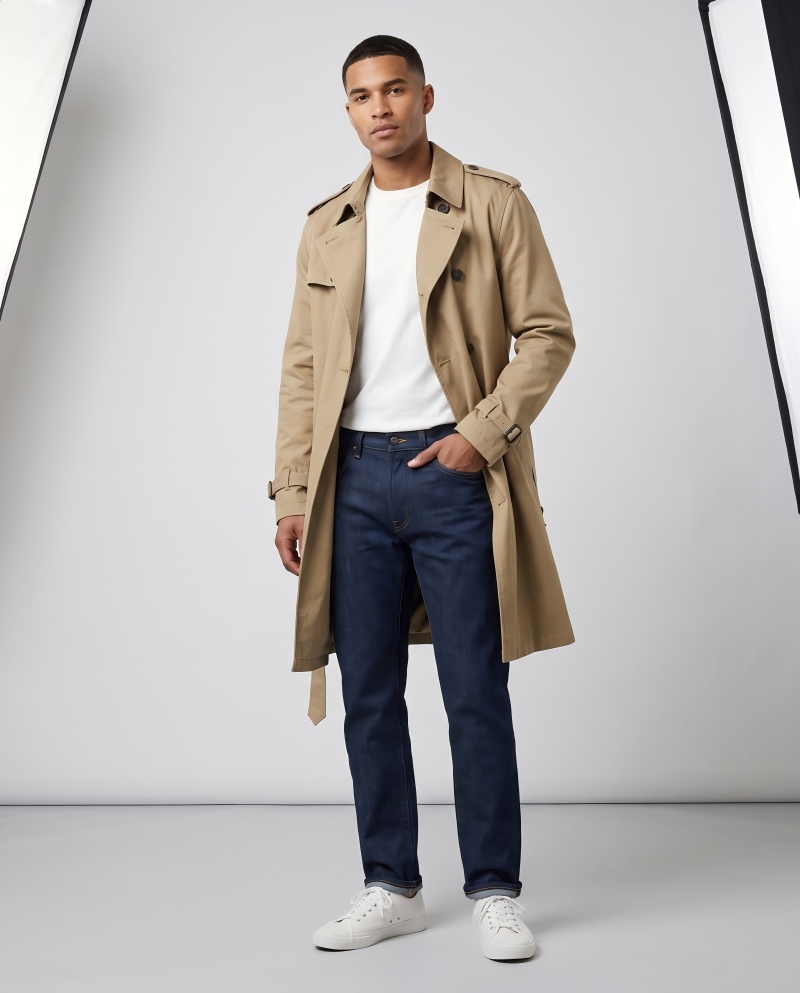
Trench fit mainly comes down to length and shoulder line. On length: knee-length is the most classic and versatile, fitting most heights; short is crisper and younger, good for casual wear; long has strong presence but is height-dependent. On the shoulders, aim for fitted but with room — enough for an inner layer without looking loose. When layering a thick hoodie, size up half a size to avoid tightness. A tailored fit is the foundation of a good trench look.
Inner Layers: The Casual Key
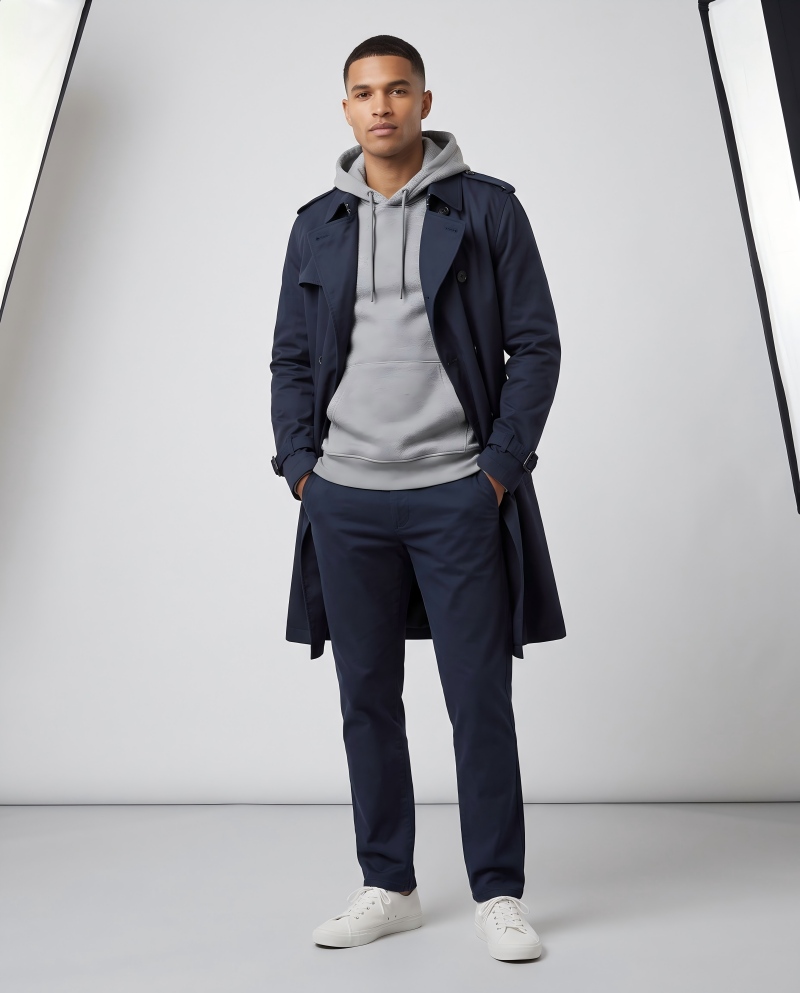
The trench’s “mixed” feel mostly comes from the inner layer. The classic casual combo is trench + tee: a white heavyweight tee instantly pulls the trench back to everyday, clean and effortless. Step it up with a crewneck sweatshirt or fleece hoodie — warmer and more youthful, perfect for deep fall. For something dressier, a knit or a shirt with a hint of collar adds sharp, layered polish.
Bottoms and Shoes
- Jeans: the trench’s best partner — a blue-and-white contrast that’s fresh and casual.
- Chinos/trousers: more formal and sharp, good for commuting and business-casual.
- Joggers: the boldest mix, giving the trench a relaxed street feel.
- Shoes: canvas shoes and white sneakers read casual; loafers and boots read formal. The shoe choice sets the whole tone.
Color and Coordination
For trench color, start with the four basics — khaki, beige, navy, black: khaki and beige are the most classic, navy and black are slimmer and sharper. On coordination, light inner layers (white/light gray) brighten the whole look, while dark or denim bottoms ground the layers. Avoid patterns top and bottom — the trench is the star, so keep the inner layers simple.
FAQ
Q1: What temperature is a trench coat for?
Solo, it suits 10–18°C early and deep fall; layered over a sweatshirt, down to around 8°C. Colder than that, switch to a heavier coat.
Q2: A long trench makes me look short — what do I do?
Go knee-length or short, or wear it open to show the waistline; pair a monochrome or dark bottom half to lengthen your proportions.
Q3: Is a tee under a trench too casual?
Not at all — it’s the trendiest way to wear it. A heavyweight tee’s neutral vibe softens the trench’s formality, clean and elevated.
Q4: What color trench should I get?
First one in khaki or beige (most classic); a second in navy or black (slimmer and sharper).
Q5: Can I machine-wash a trench?
Depends on fabric. Cotton trenches handle a cold gentle cycle; wool or coated ones are best dry-cleaned to avoid shrinkage or coating damage.
Q6: Open or buttoned?
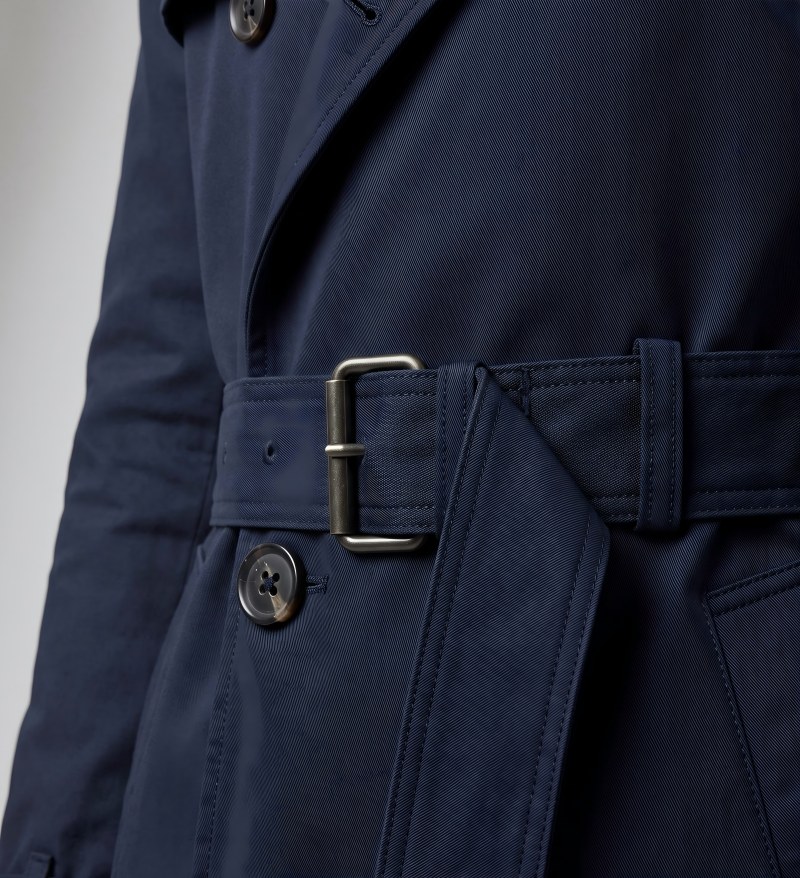
Open reads more relaxed and taller — the daily go-to. Buttoned is more formal and warm; with a belt, even sharper.
Conclusion & Further Reading
The essence of trench styling is one line: soften formality with casual pieces. A heavyweight tee or sweatshirt inside, jeans below, and canvas shoes finish a trench into an effortless, elevated look. Wingtu Apparel’s heavyweight tee and crewneck sweatshirt are the low-stress trench inner layers — clean, durable, and easy to pair.
Further reading: