Most layered outfits look bulky for one reason: the first layer is wrong. It’s either too thick and poofs up your jacket, too tight and digs in, or see-through enough to show off what’s underneath. A baselayer decides how good your outer layers look. This guide covers fabric, fit, and the order to layer in, so you can wear three layers in winter without looking like the Michelin Man.
Table of Contents
- What a baselayer actually does
- Choosing the right fabric
- Neckline and sleeve length
- Layering order and color
Step 1: What a Baselayer Actually Does
A baselayer is not just “the shirt underneath.” It does three jobs at once: traps heat between your skin and the fabric, wicks sweat away so you don’t get cold and damp, and keeps the silhouette clean — no wandering collars or bunching sleeves messing up your outer layers. Once you see it that way, you stop choosing a base layer by thickness alone.
Step 2: Choosing the Right Fabric
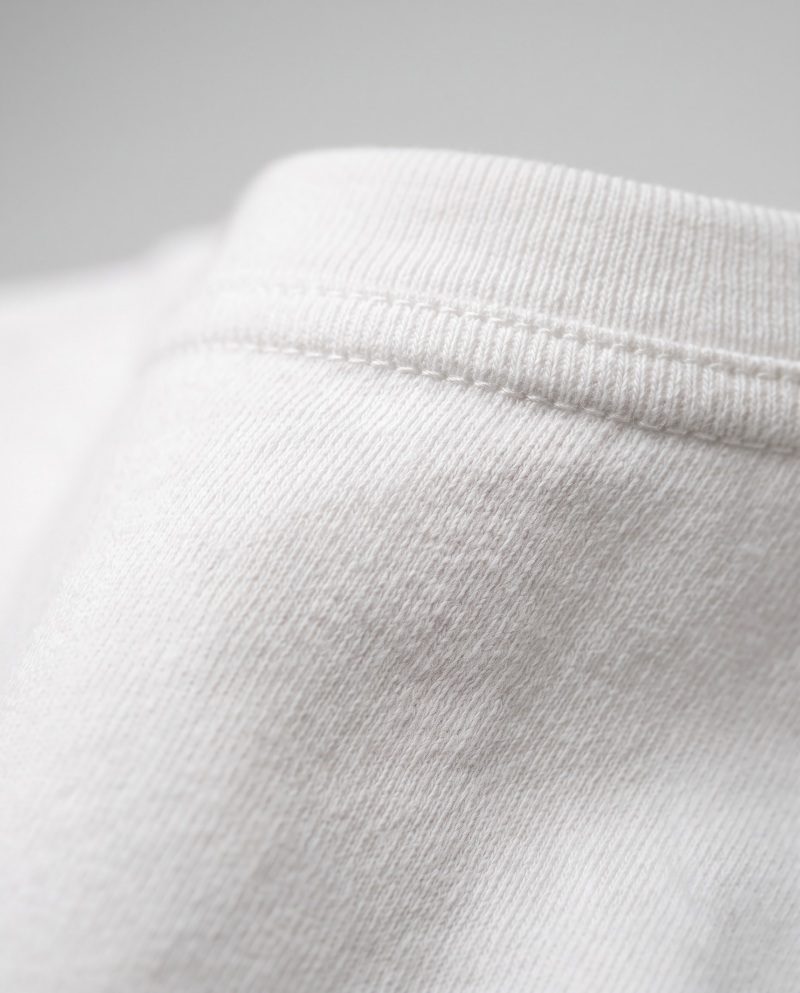
- Heavyweight cotton: the first pick for fall and winter base layers. A heavyweight tee around 220 GSM stays structured against your body instead of clinging, and the collar holds its shape under a hoodie.
- Modal / viscose: soft, drapey, and smooth against the skin — great when you want a seamless look, but not very warm. Better for spring and fall.
- Wool / merino: top-tier warmth and moisture management, made for outdoors, but it can itch for sensitive skin and needs hand washing.
- Polyester blends: dry fast and are easy to care for, good for workouts, less cozy for everyday wear.
The rule of thumb: the side touching your skin should be soft, not scratchy. The fabric needs stretch without squeezing. The fit should be “close but not tight” — skin-hugging without cutting in.
Step 3: Neckline and Sleeve Length
Match the neckline to your outer layer: crew neck works with almost everything — shirts, hoodies, jackets; V-neck is for unbuttoned shirts or when you don’t want the neckline showing; turtleneck bases are for deep winter under a coat or puffer. Sleeve length is non-negotiable — too-short sleeves are the most common baselayer fail, and you’ll notice the gap the moment you reach for anything.
Step 4: Layering Order and Color
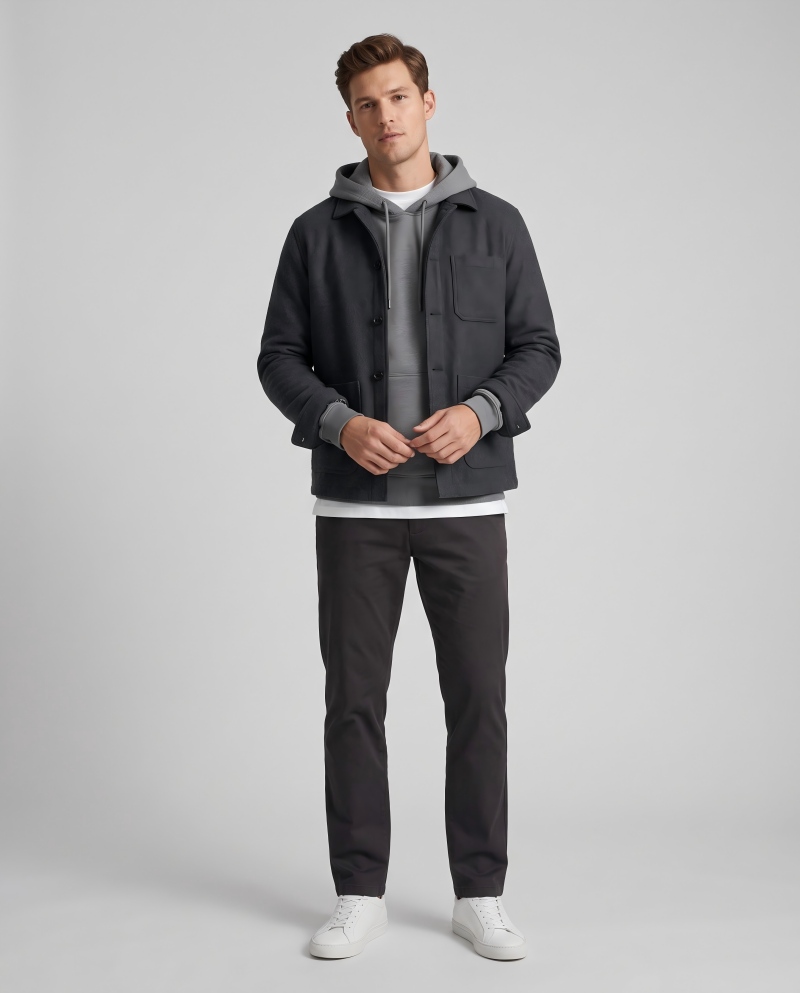
The correct order is: base layer → mid layer → outer layer. Baselayer first, then a hoodie or knit, then the coat. Colors should stay solid and simple — white, black, gray, oatmeal. Busy prints show through. Same-color layering looks expensive; a subtle contrast adds depth. And if you want to look slimmer, wear a dark base with your coat open.
FAQ
Q1: What’s the difference between a baselayer and a regular tee?
Fit and function. Baselayers are cut closer to the body, wick better, and keep their collars stable. A regular tee is roomier and tends to bunch up at the waist when worn under things.
Q2: Do I always need thermal fabric in winter?
Depends on the setting. For mostly-indoor commuting, heavyweight cotton is enough. Only extended time outdoors calls for wool or technical fabrics. Don’t layer on thickness for “warmth” — it puffs out your jacket.
Q3: Will my baselayer show through?
Light base under a dark shirt is usually fine; dark under light can show. White and oatmeal are the safest base colors.
Q4: When should I pick a V-neck base?
For unbuttoned shirts, or when you don’t want the base collar to show. A V-neck also lengthens the neckline, which flatters round faces and shorter necks.
Q5: Can I wear a baselayer on its own?
Yes. A high-GSM heavyweight tee is an outerwear piece in its own right — wearing it as a base is just a side gig. Pick a good cut and you can take the jacket off without looking unfinished.
Q6: How often should I wash a baselayer?
Every wear, since it sits against your skin. Wash inside out in cold water and lay flat to dry. Skip the hot dryer.
Conclusion
Choosing a baselayer comes down to one line: soft against the skin, close without squeezing, collar and sleeves that behave. The heavyweight tee (220 GSM) from Wingtu Apparel pulls double duty as a fall/winter base layer, and if you want something slimmer, the long-sleeve basics come in white, black, gray, and oatmeal — the four safe colors.
Related reading: