QC Is a System, Not a Last Look
Most buyers think quality control means someone opening a few cartons before shipping. That is not QC — that is damage control after nothing can be changed. Real QC runs before, during, and after production, and it decides against a standard called AQL. Understand the three stages and you stop discovering problems at the port and start catching them on the line.
This is written for brand owners and sourcing managers who need a QC framework that actually works.
Defect Classes: Critical, Major, Minor
AQL — Acceptable Quality Limit — is a statistical sampling standard: you pull samples from the lot and use the number of defects in each class to decide whether to accept or reject.
| Defect class | Definition | Examples | Common limit |
|---|---|---|---|
| Critical | Unsafe or illegal | Broken needles, exposed metal, strangulation risk | Zero tolerance |
| Major | Unacceptable to the buyer | Wrong color, out-of-tolerance measurement, broken seam | AQL 2.5 |
| Minor | Small issues, within tolerance | Loose threads, slight shade variation | AQL 4.0 |
The classes matter because they are not equal. One critical defect fails the whole lot regardless of count. Major defects are counted against a tight limit; minor defects get more room.
The Three Stages of Inspection
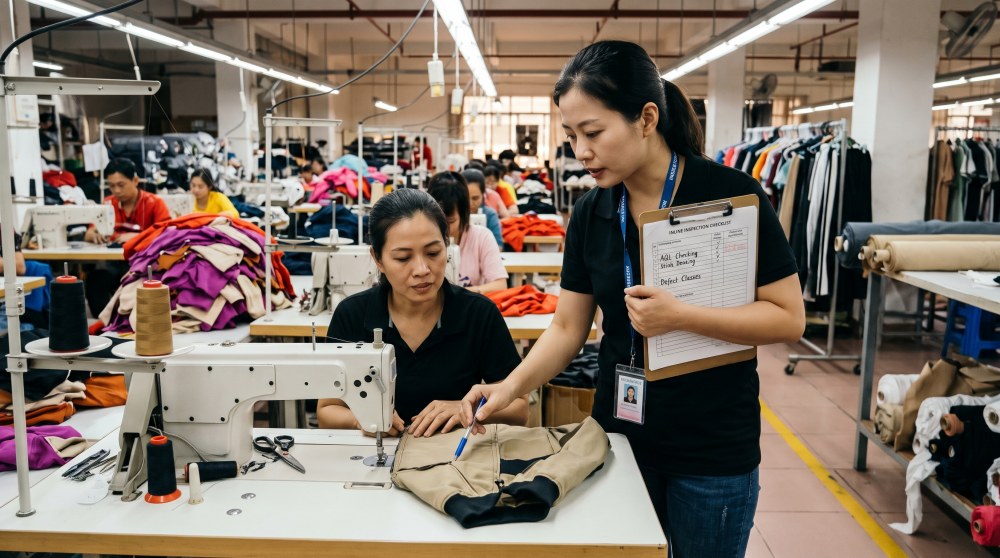
Inline inspection. The QC team checks during production — cutting, sewing, finishing — and pulls problems before thousands of wrong units are made. This is the cheapest point to catch defects.
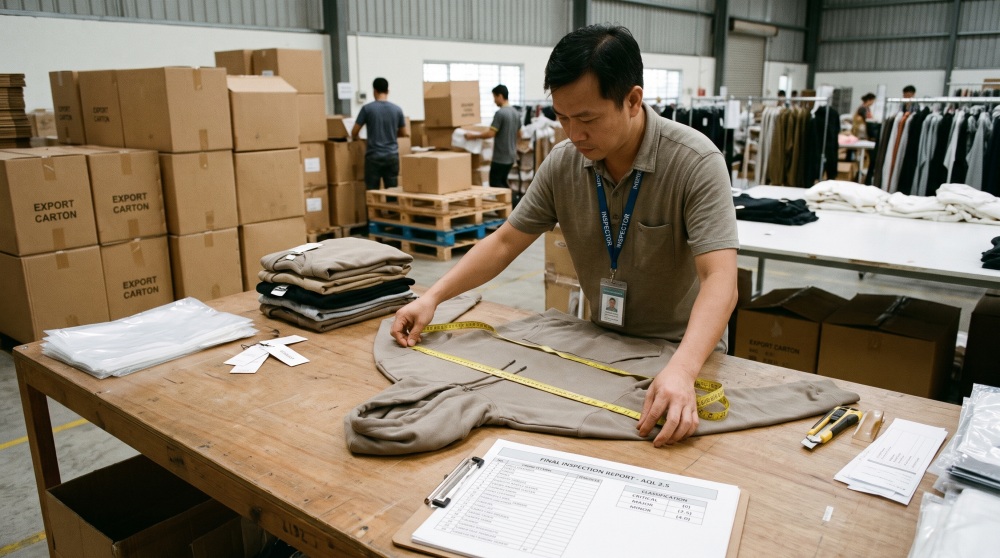
Final inspection. Once production is complete, the garments are checked against the tech pack: measurements, seams, trims, color. This is the gate before packing.
Third-party inspection. An independent body verifies the lot before shipment against the agreed AQL. This is the buyer’s evidence and the basis for holding the balance.
What Each Stage Checks
| Checkpoint | What is checked |
|---|---|
| Fabric | Weight, color, shade variation between lots |
| Measurements | Against tech pack tolerances (±0.5 cm) |
| Seams | Stitch density (SPI), seam strength, thread tension |
| Trims | Labels, buttons, zippers, drawcords |
| Finishing | Pressing, thread trimming, stray threads |
| Packaging | Polybag, hangtag, carton spec, quantity |
Red Flags in a QC Plan
- “We do QC ourselves, no report.” Every factory does QC. The question is whether you get a report measured against the agreed AQL.
- No inline inspection. If the first check is the last one, the defects are already in bulk.
- Vague defect language. “Good quality” is not a standard. AQL 2.5 with zero tolerance on critical defects is.
- Third-party inspection refused. A factory that will not let an independent body verify the lot is telling you something.
How to Build QC That Works
Agree the AQL in the contract, state the defect classes and limits, run inline inspection, require a final inspection report, and hold the balance until after third-party pre-shipment inspection. QC is not a cost. It is the mechanism that decides whether the goods you paid for and the goods you received are the same thing.
A Straight Answer
Wingtu Apparel is one of many options. We do full-category custom apparel — tees, hoodies, pants, outerwear, shirts, polos, knitwear, denim, and loungewear — and we run inline and final inspection against the agreed AQL, with third-party inspection welcome. We are not the factory that takes rigid or non-apparel projects. If your line is apparel, tell us your QC standard and we will tell you whether it is achievable on your spec.
FAQ
Q: What does AQL mean in apparel?
A: AQL is the Acceptable Quality Limit — the maximum number of defects allowed per class in a sampled lot. Apparel commonly uses AQL 2.5 for major defects.
Q: What is the difference between inline and final inspection?
A: Inline inspection happens during production and catches defects early; final inspection happens after production and checks the finished garment against the spec.
Q: What counts as a critical defect?
A: Anything unsafe or illegal — broken needles, exposed metal, strangulation risk. Critical defects carry zero tolerance and fail the whole lot.
Q: Should I use third-party inspection?
A: On a first order or a large one, yes. An independent body verifies the lot against the agreed AQL, and the report is your evidence before releasing the balance.
CTA
Send us your QC standard — AQL level, defect limits, inspection stages — and we will confirm before you order whether it is achievable on your spec.
Get a Quote