Once it cools down, what you want most is a jacket that’s “warm the moment you put it on.” The sherpa jacket is exactly that — a fluffy sherpa lining or surface that’s soft, warm, and has a cozy, warm-and-fuzzy charm, making it one of the hottest fall/winter pieces of recent seasons. But it has its quirks: how to choose, how to wear, how to wash. Here’s everything, so you stay warm and look good.
What Is a Sherpa Jacket?
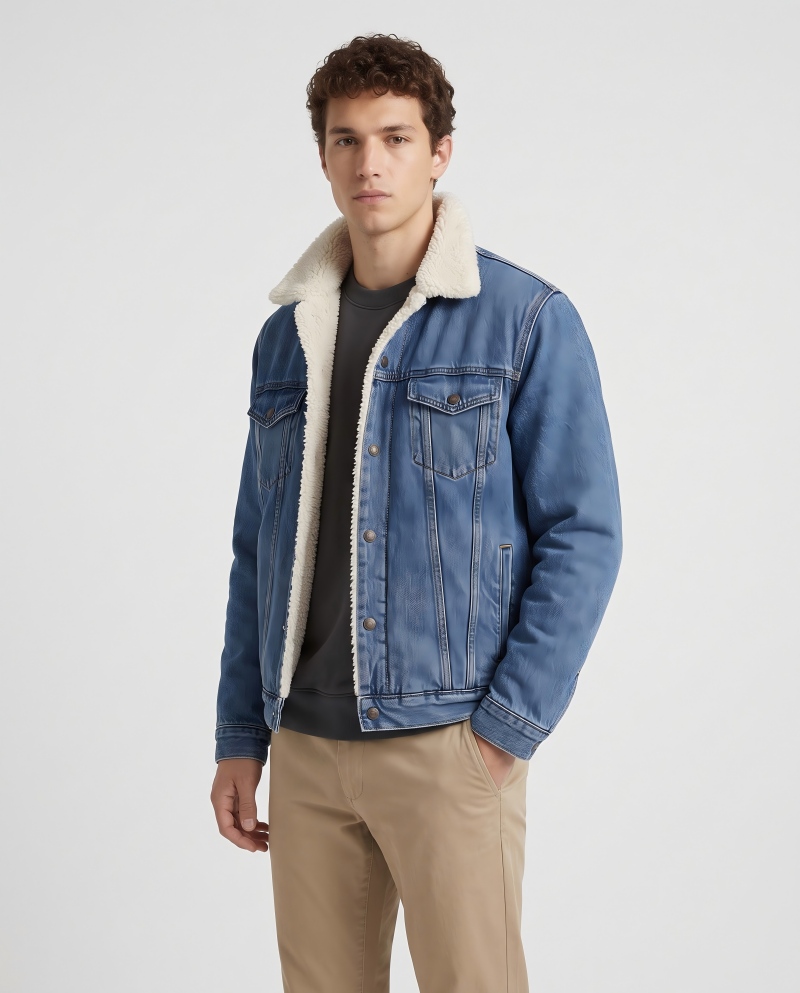
Sherpa is a wool-like fleece fabric with a fluffy, curly pile that imitates lambswool — warm and soft against the skin. Sherpa jackets usually come in two types: full sherpa (pile on both the lining and surface) and sherpa lining + a structured shell (denim, canvas, or nylon shell with a sherpa interior). The former is softer and warmer; the latter is more structured and durable, with a tougher look.
How to Choose a Good Sherpa
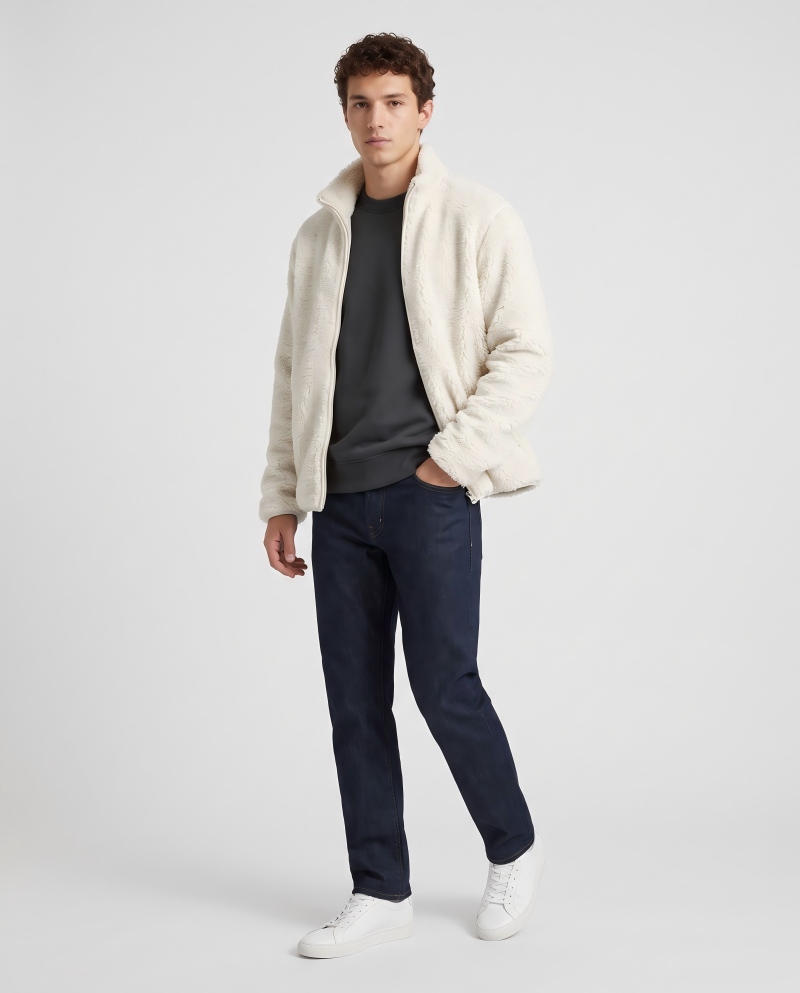
Look at three things: pile density (denser is warmer and looks more premium), hand feel (soft, not scratchy, with good rebound), and fit (relaxed but with a clear shoulder line, room for an inner layer without bulk). A good sherpa has dense, fluffy pile that bounces back quickly after you rub it; a poor one is sparse and tangles or pills easily. Also check the interior finishing — flat seams that don’t rub your skin, and a smooth lining that’s easy to put on and take off.
How to Wear It Without Bulk
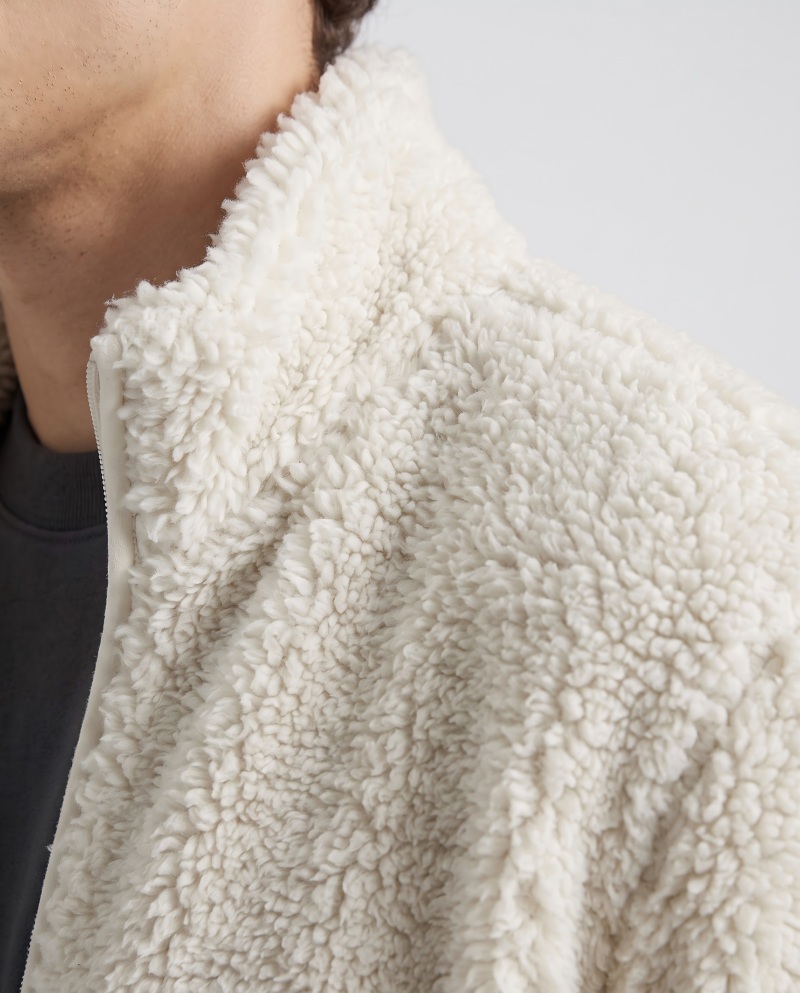
Sherpa has a built-in “fluff” that can read bulky if worn wrong. Three tricks: keep the inner layer thin (a heavyweight tee or light knit, not a thick hoodie), keep the bottom clean (straight jeans or slim casual pants, avoid baggy ones), and wear it open or belt it (open slims, belting cinches the waist). The key is “fluffy on top, clean below” — use the bottom half to balance the top’s volume.
Color and Coordination
For sherpa color, start with off-white, light camel, and oat — fluffy light shades read softest and most premium, and show off the sherpa texture best. For dirt-resistance and a slimming look, go dark camel, charcoal, or black. On coordination, a dark or tonal inner layer lengthens your proportions, and denim or dark bottoms ground the layers — avoid fluff on both halves.
Washing and Care
Sherpa care should be gentle: turn inside-out, cold water, gentle machine cycle — or hand wash; never high-heat dry (it damages the pile and causes matting), and ideally dry flat. Once dry, brush lightly with a soft-bristle brush to restore the fluff. Store hung or flat, and avoid heavy pressure so the pile doesn’t flatten. Cared for right, a sherpa stays soft for many seasons.
FAQ
Q1: Is a sherpa jacket warm?
Very — the fluffy pile traps a lot of air, so its warmth approaches down. It’s one of the warmest fall/winter jackets.
Q2: What’s the difference between sherpa and regular fleece?
Sherpa is wool-like long pile — fluffier, curlier, warmer, and richer in texture; regular fleece has shorter fibers and is lighter.
Q3: Does a sherpa jacket make me look bulky?
It can if worn wrong. The trick: thin inner layer, clean bottom, wear it open or belt it — “fluffy top, clean below.”
Q4: Can I machine-wash a sherpa jacket?
Yes — inside-out, cold water, gentle cycle, no high-heat drying, and flat dry is best.
Q5: How do I deal with sherpa pilling?
Use a fabric shaver or soft brush lightly, don’t pull. Choosing high pile density and good quality reduces pilling.
Q6: What temperature is a sherpa jacket for?
Over a tee or light knit, it suits 0–10°C deep fall and early winter; colder than that, layer a hoodie inside or a coat on top.
Conclusion & Further Reading
The sherpa jacket is the most worthwhile post-cooldown buy: warm, soft, and sharp. Choose by pile density, hand feel, and fit; wear it “fluffy on top, clean below”; and care for it gently — and it lasts many winters. Wingtu Apparel’s fleece jacket and fleece hoodie are other great picks in the warmth family, lighter and easier to care for in daily commuting.
Further reading: