When fall arrives, the whole world changes color — leaves turn gold, rust, and olive green. That’s the cue to switch your wardrobe too, and earthy tones are fall’s most fitting palette: camel, olive green, rust, brown, beige… warm, flattering, rich in texture, and easy to make look “elevated.” Here’s how to wear earth tones naturally, with real depth.
What Are Earthy Tones?
Earthy tones are warm, low-saturation colors drawn from nature — the brown of soil, the olive green of leaves, the rust of autumn foliage, the beige and camel of sand. Their shared traits are low saturation, soft brightness, and lasting, textured appeal, and they’re naturally harmonious with each other, so it’s hard to go wrong. That’s why earth tones are the “all-purpose fall palette.”
The Base Earth Colors
- Beige/oat: the lightest, most versatile base color that brightens the whole look.
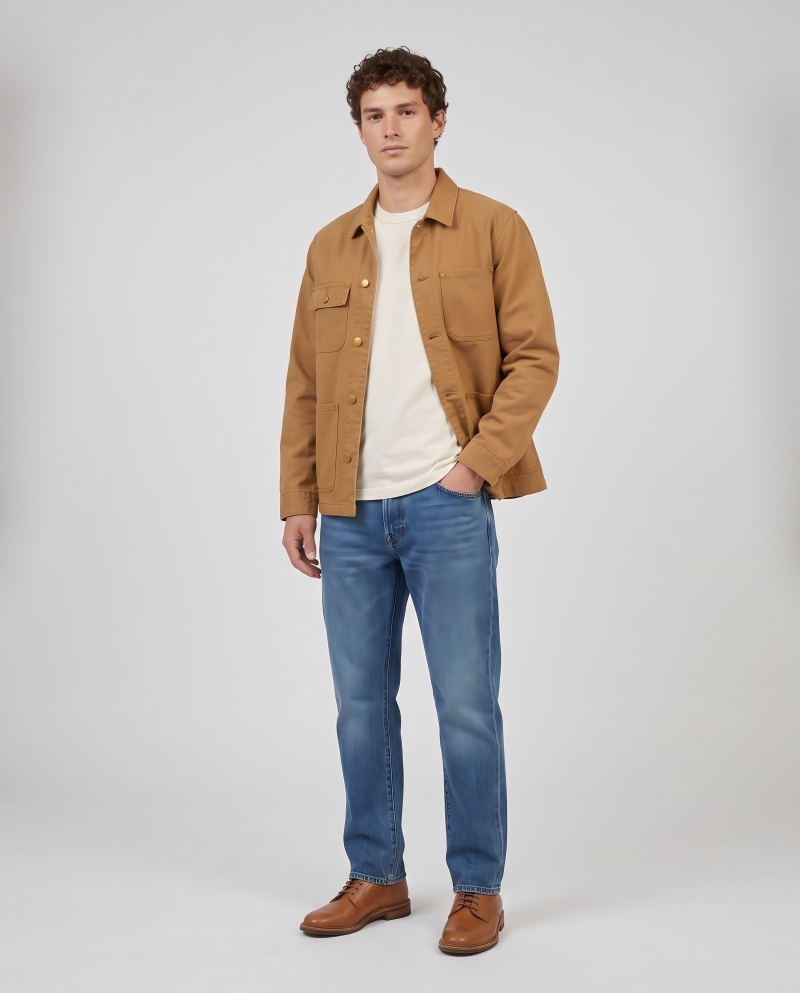
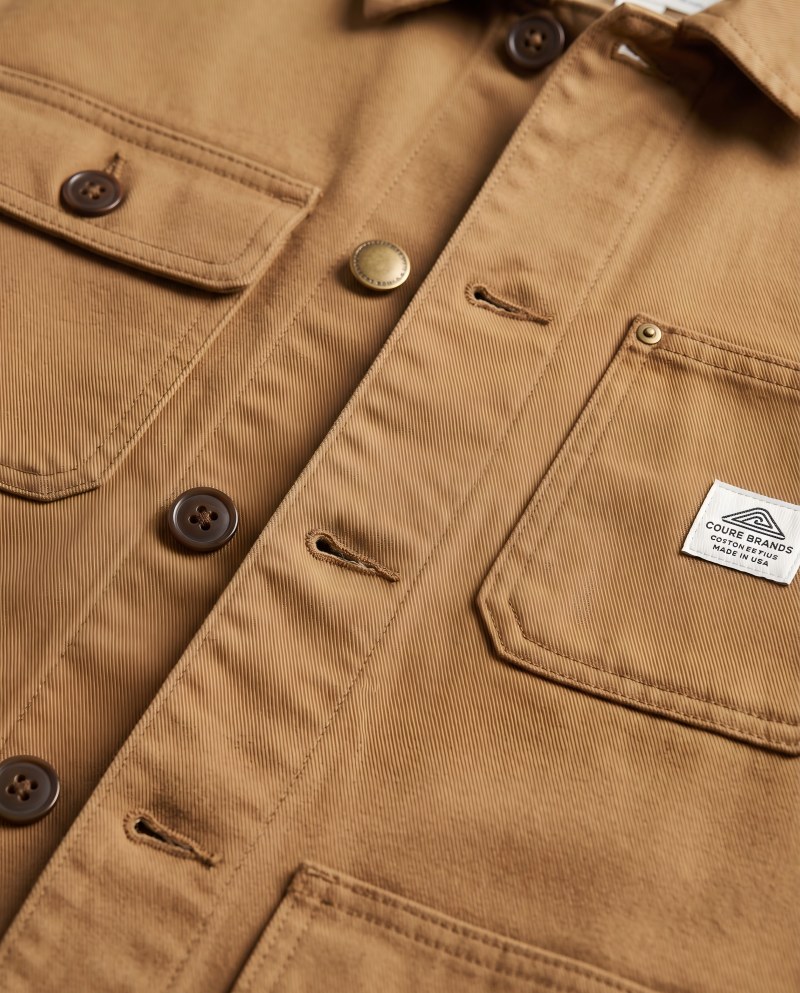
- Khaki/camel: the core of earth tones — warm and elevated, fits both work and weekend.
- Olive green: military, dirt-resistant, and sharp — the “cool” color in the family.
- Brown/caramel: rich and warm, the strongest fall mood.
- Rust/brick: the “accent” of earth tones — lifts your complexion and reads retro.
Color Formulas
- Formula 1: tonal gradient. Different shades of the same family (light camel + dark brown) — clean, sharp, elevated, almost impossible to get wrong.
- Formula 2: neutral + one earth tone. A white heavyweight tee or gray sweatshirt as the base, layered with one khaki or olive piece — clean with a focal point.
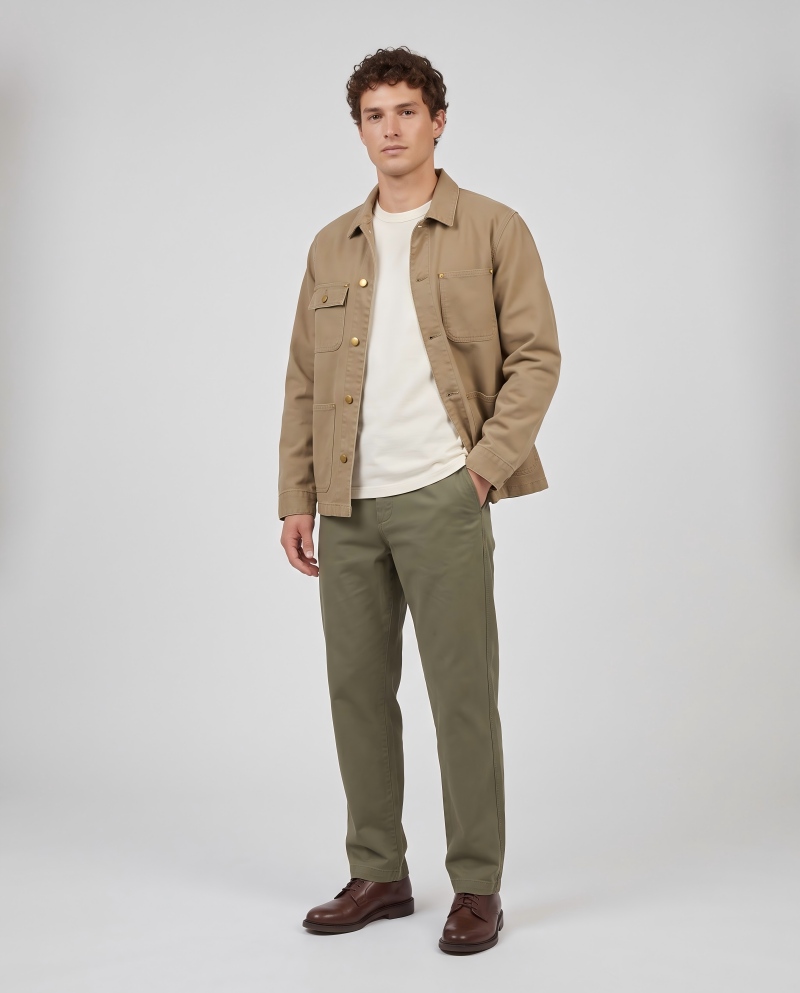
- Formula 3: earth-on-earth. Khaki + olive, or brown + rust — two adjacent or complementary earth tones for depth and retro character.
- Formula 4: earth tones + denim blue. Earth tones and denim blue are a natural pair — warmth balanced with freshness, the most everyday option.
How to Pick Pieces
Invest in versatile outerwear and bottoms first: a khaki or olive work jacket, a pair of chinos, a beige knit — all high-use basics. For tops, earth-tone heavyweight tees and crewneck sweatshirts work as inner layers or solo. The principle: big pieces in neutral earth tones (khaki/olive/brown), small pieces in accent colors (rust/caramel) — easy to pair, and full of depth.
Color Mistakes to Avoid
- Avoid all-dark: head-to-toe dark brown or dark green reads heavy — add one light piece to lift it.
- Avoid earth tones + neon: too much saturation contrast, looks jarring.
- Limit accent colors: one or two rust/caramel accents are enough — don’t pile them on.
- Mind the lightness gap: a clear difference in lightness between top and bottom is where the depth comes from.
FAQ
Q1: What skin tones suit earth tones?
Earth tones suit almost everyone. Lighter skin picks deeper earth tones for warmth; darker skin glows in light beige and camel — both work.
Q2: How do I wear earth tones without getting it wrong?
Use tonal gradients or “neutral + one earth tone” — the safest. A white tee + khaki jacket is a classic, can’t-miss combo.
Q3: Do earth tones look dated?
Not with the right lightness and pairing. Add a light piece (off-white/white) to lift it, or balance with denim blue to look youthful.
Q4: What’s the most versatile earth tone for fall?
Khaki/camel is the most versatile, olive green a close second. As outerwear or bottoms, they pair with nearly everything in your closet.
Q5: How do I pair earth tones with black?
You can, but avoid all-black. Use black for the bottom or inner layer and earth tones for the outer or top — more depth.
Q6: How do I use earth-tone accent colors?
Rust and caramel work best as small pieces (scarf, hat, one inner layer) — one or two accents is enough, don’t let them dominate.
Conclusion & Further Reading
Earth tones are fall’s easiest, most textured palette: tonal gradient, neutral + earth, earth-on-earth, and earth + denim blue — four formulas for an elevated look. Wingtu Apparel’s heavyweight tee, crewneck sweatshirt, and work jacket come in off-white, gray, khaki, and olive — the practical basics for this palette.
Further reading: