“Zipper” Is Not a Spec
Writing “zipper” in the BOM is useless. Writing “YKK metal zipper, 20 cm, antique brass, auto-lock” is a spec. The gap between the two is the gap between the garment you designed and the one that arrives. Every trim and every seam is either specified, or the factory fills it with its cheapest default.
This is written for brand owners and product developers who need to specify trims and construction so the factory can actually build to it.
The Specification Table
This is the core asset. Every field below is a decision; leave one blank and the factory makes that decision for you.
| Component | Fields to specify | Example entry |
|---|---|---|
| Fabric | Composition, weight, width, finishing, color | 240 GSM combed cotton knit, 180 cm, preshrunk |
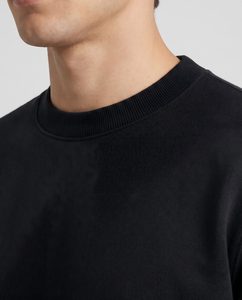
| Neckline | Type, structure, reinforcement | Rib neck, 1×1 rib, reinforced |
| Cuff / waistband | Type, width, elastic spec | Rib cuff, 6 cm, high recovery |
| Hem | Type, seam, width | Two-needle coverstitch, 2 cm |
| Seams | Type, seam allowance, stitch density | 4-needle 6-thread flatlock, 6 mm, 12 SPI |
| Zippers | Type, length, material, finish | Metal zipper, 20 cm, antique brass |
| Buttons | Size, material, attach method | 15 mm, corozo, cross-stitch |
| Labels | Content, placement, attachment | Care label, side seam, sewn |

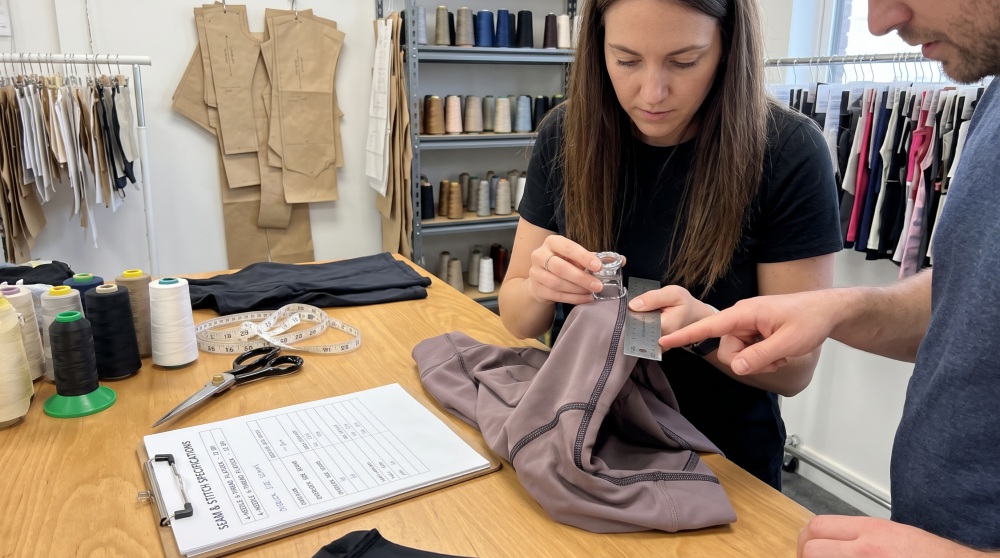
Seam Types and What They Belong To
Seams are not decoration. They decide stretch, strength, and how the garment feels against the skin.
| Seam | Used on | Why |
|---|---|---|
| Overlock | Knit side seams | Stretchy, fast, standard |
| 4-needle 6-thread flatlock | Sportswear and activewear seams | Flat, strong, comfortable against skin |
| Coverstitch (2-needle) | Hems, necklines | Stretchy, clean finish |
| Single-needle lockstitch | Woven seams, topstitching | Clean, classic |
| Felled seam | Denim, shirts | Strong, durable |
Specify the seam type and the stitch density. A side seam can be a 10 SPI overlock or a 12 SPI flatlock — they cost differently and they perform differently. If you do not write it down, you get whichever seam is cheapest for the factory.
The Trims That Fail First
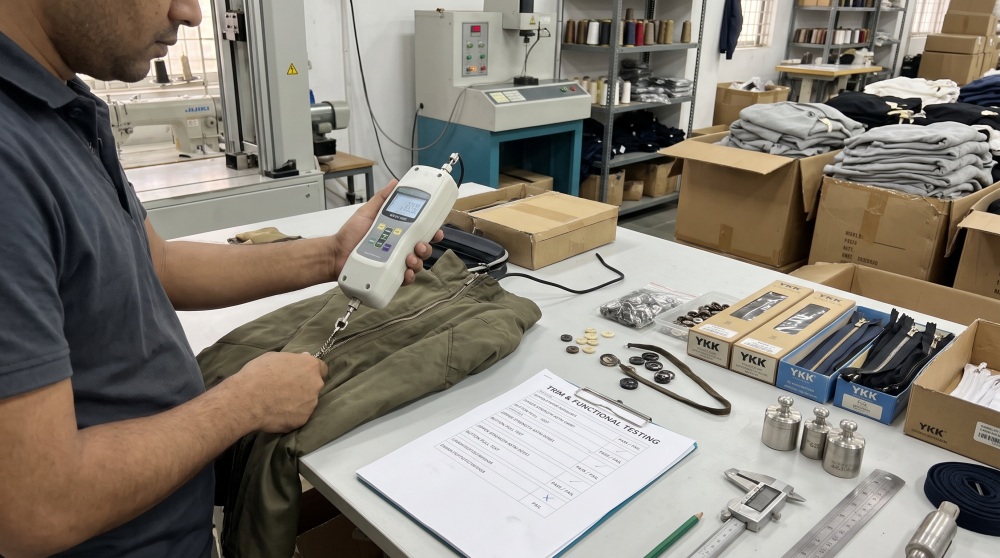
Zippers. Specify the type (metal, nylon, invisible), the length, and the finish. A cheap zipper is the first thing a customer touches and the first thing that fails.
Buttons and snaps. Size, material, and attach method. A button that falls off after one wash is a major defect and a return.
Labels and hangtags. Content, placement, and attachment. Care labels are a legal requirement in most markets, and the content must match the actual fiber content.
Drawcords and elastic. Width, material, and the cord tips. Drawcords in kidswear are regulated — know the rules before you specify.
Which Tests Matter
Tie the spec to a test. Seam strength, zipper strength, button pull, colorfastness, and shrinkage all have methods and pass/fail limits. A spec that stops at “good zipper” cannot be verified; a spec that says “zipper strength per ASTM D2061, not less than X kg” can.
A Straight Answer
Wingtu Apparel is one of many options. We do full-category custom apparel — tees, hoodies, pants, outerwear, shirts, polos, knitwear, denim, and loungewear — and we read specs down to the seam type and the stitch density. We are not the factory that takes rigid or non-apparel projects. If your line is apparel, send your tech pack and we will mark every trim and seam that is still being guessed at.
FAQ
Q: Why does stitch density (SPI) matter?
A: SPI decides seam strength and appearance. Higher SPI is stronger but stiffer; lower SPI is softer but weaker. Specifying it stops the factory from making that choice for you.
Q: What is a 4-needle 6-thread seam?
A: A flatlock seam commonly used on sportswear and activewear. It lies flat, stretches well, and feels comfortable against skin instead of standing up like an overlock.
Q: How detailed should trim specs be?
A: Every trim a customer touches, or that can fail, needs a spec — type, size, material, attach method. A “zipper” or “buttons” with no spec hands the decision to the factory.
Q: Do care labels need to be specified?
A: Yes. Care labels are a legal requirement in most markets and the content must match the actual fiber content. Getting it wrong is a compliance problem, not a style one.
CTA
Send us your tech pack and we will mark every trim and seam that is still being guessed at — before it costs you a round of sampling fees.
Get a Quote