Let’s be real: the sleepwear business is booming. Everyone wants to be cozy, and the “loungewear-all-day” trend isn’t going anywhere. But if you’re a boutique owner or an Amazon seller, you know that moving from “hey, these are cute” to actually making a profit on a bulk order is a whole different ball game.
I’ve seen so many retailers get excited about a low per-unit price, only to end up with a warehouse full of pajamas that feel like sandpaper or, worse, fall apart after one wash. It’s heartbreaking to see your hard-earned capital tied up in stock you can’t sell.
If you want to keep your customers happy and your margins healthy, you need to avoid these seven common traps when buying women’s pajamas wholesale.
Falling for the “Picture-Perfect” Trap (Fabric Gaffes)
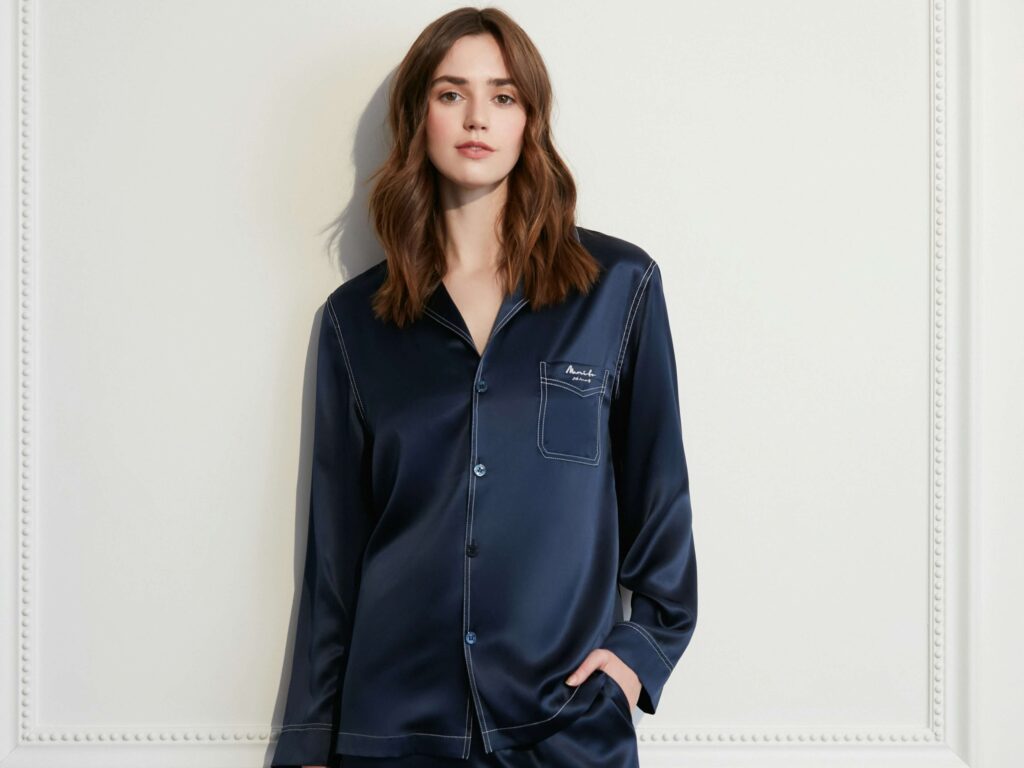
We’ve all been there. You see a photo of a model draped in what looks like liquid silk. The price is $3.50 a set. You hit “order,” and when the boxes arrive at your door, it’s a shiny, static-filled polyester nightmare.
In the wholesale world, photos are often just “inspiration.” What matters is the fabric composition and GSM (Grams per Square Meter). If a supplier can’t tell you the GSM, run.
Why Fabric Weight Matters
| Fabric Type | Recommended GSM | Why it matters |
| Cotton Jersey | 160 – 180 GSM | Anything lower is see-through. Your customers don’t want their underwear showing. |
| Bamboo Viscose | 200 – 250 GSM | Bamboo is heavy; if it’s too light, it loses that signature “drape.” |
| Silk/Satin | 16 – 19 Momme | In silk, we use Momme instead of GSM. 12 Momme is cheap and fragile; 19 is luxury. |
Pro Tip: I once talked to a shop owner who bought 500 sets of “flannel” pajamas that were so thin you could literally read a newspaper through them. She had to mark them down 70% just to get rid of them. Don’t be that person. Ask for the specs.
The “Asian Fit” vs. “Western Fit” Sizing Disaster
This is probably the biggest headache in sourcing pajamas from China. A “Large” in Guangzhou is often a “Small” in New York or London. If you don’t clarify the sizing chart before the production run starts, you’re going to deal with a mountain of returns.
Women’s pajamas need to be roomy. Nobody wants to sleep in a tight waistband.
- Request a Physical Size Chart: Don’t just accept “S, M, L, XL.” Ask for the measurements in centimeters or inches for the bust, waist, and—most importantly—the rise of the pants.
- The “Crotch Test”: For wholesale sleepwear, a common cost-cutting move is to skimp on the fabric in the rise (the crotch area). If it’s too short, the pajamas will be incredibly uncomfortable to sit in.
Skipping the Sample Phase to “Save Time”
I get it. You’re in a rush. The holiday season is coming, or you want to launch by spring. You think, “I’ve seen the video, it looks fine, let’s just go straight to the 1,000-unit order.”
Stop.
A sample is your insurance policy. When you get that sample, you need to be a bit of a jerk to it.
- Wash it 5 times: Does it shrink? Does the pink top bleed onto the white piping?
- Check the seams: Pull at the armpits. If you see daylight between the stitches, the tension is wrong.
- Smell it: If it smells like a chemical factory, your customers will hate it.
At WingtuApparel, we always tell our partners that the sample is the “contract.” If the bulk doesn’t match the sample, you have the leverage to ask for a refund or a remake.
Buying Only “Viral” Trends and Ignoring the Classics
It’s easy to get distracted by those neon-green leopard prints or the latest “TikTok-famous” feather trim pajamas. Trends are fun, but they have a shelf life.
If you put all your money into a hyper-trendy print and it doesn’t sell out in 30 days, you’re stuck with “dead stock.”
The Golden Ratio for Inventory:
- 70% Classics: Solid colors (Navy, Black, Blush), classic piping, and high-quality modal or cotton. These sell year-round.
- 30% Trends: Seasonal prints, holiday themes, or trendy cuts.
Think of the classics as your “bread and butter.” They pay the rent. The trends are the “dessert”—they bring people into the shop, but they’re riskier.
Miscalculating Lead Times and Shipping Windows
I once knew a guy who ordered 2,000 sets of Christmas-themed pajamas in October. He thought he was early. Between the fabric sourcing, the sewing, and the sea freight congestion, the boxes landed at his warehouse on December 26th.
He lost a fortune.
When you’re buying women’s pajamas in bulk, you have to work backward:
- Production: 20-35 days (depending on the quantity).
- Shipping (Sea): 30-45 days.
- Shipping (Air): 7-10 days (but it’s expensive!).
- Buffer: Always add 2 weeks for “life happens” moments like customs inspections or port strikes.

Forgetting the “Little Things” (Labels and Packaging)
When you receive 500 sets of pajamas in a giant box, and each one is stuffed into a cheap, crinkly plastic bag with no “Made in” label or “Care instructions,” you have a problem.
- Custom Branding: If you’re trying to build a brand, ask your supplier about private labeling. Having your own logo on the neck tag makes the pajamas feel like they’re worth $60 instead of $20.
- Packaging: Polybags are standard, but are they recycled? Do they have a suffocation warning? Small details like this save you from legal headaches and make you look like a pro.
Chasing the Lowest Price Instead of the Best Value
If Supplier A quotes $8 and Supplier B quotes $6.50 for the “same” pajama, there is a reason. Maybe Supplier B is using 120 GSM fabric instead of 180. Maybe their workers are being rushed, leading to crooked seams.
In the bulk sleepwear world, you get what you pay for. A $1.50 difference per unit might save you $750 on the order, but if 20% of the items are defective, you’ve actually lost money.
Focus on Value = (Quality + Reliability + Consistency) / Price.
Conclusion
Sourcing women’s pajamas wholesale isn’t just about picking out pretty colors. It’s about being a bit of a detective. You have to ask the hard questions about fabric weight, demand to see real size charts, and never, ever skip the sample.
By avoiding these seven mistakes, you’re not just buying clothes; you’re building a reliable supply chain. That’s how you go from being “just another shop” to a go-to brand that customers trust for their nightly comfort.
If you’re looking for a partner who actually pays attention to these details, we’d love to help you out. At WingtuApparel, we take the guesswork out of the process so you can focus on what you do best—selling.
Frequently Asked Questions (FAQs)
Q1: What is the best fabric to look for when buying wholesale pajamas for a boutique?
It really depends on your brand’s price point. For high-end luxury, silk and bamboo are the gold standards because they are breathable and feel premium. However, if you are looking for high-volume bulk sleepwear, a high-quality cotton-modal blend is usually the best bet. It’s soft, doesn’t pill easily, and has a great stretch that fits many body types.
Q2: How can I ensure the quality is consistent when sourcing pajamas from China?
The key is to establish a relationship with a reliable pajama manufacturing partner. Don’t just go for the one-off lowest bid on a random marketplace. Request a “pre-production sample” and tell the supplier that the bulk order must match that sample exactly. Using a supplier like WingtuApparel helps because we have our own in-house quality control team that checks the stitching and fabric before anything gets boxed up.
Q3: What is the typical Minimum Order Quantity (MOQ) for women’s pajamas wholesale?
MOQs can vary wildly. Some “ready-to-ship” wholesalers might let you take 10 or 20 pieces. But if you want custom branding or specific colors, most factories look for 100 to 300 pieces per style. We always suggest starting with a manageable amount to test the market before diving into thousands of units.
Q4: Are there any specific regulations I should know about for bulk sleepwear?
Yes! Especially in the US and EU, there are strict rules regarding flammability standards for sleepwear. You should also make sure your labels clearly state the fiber content, country of origin, and care instructions. Skipping these “boring” details can lead to your shipment being seized at customs, which is a mistake you definitely want to avoid.